
Collection
At a glance
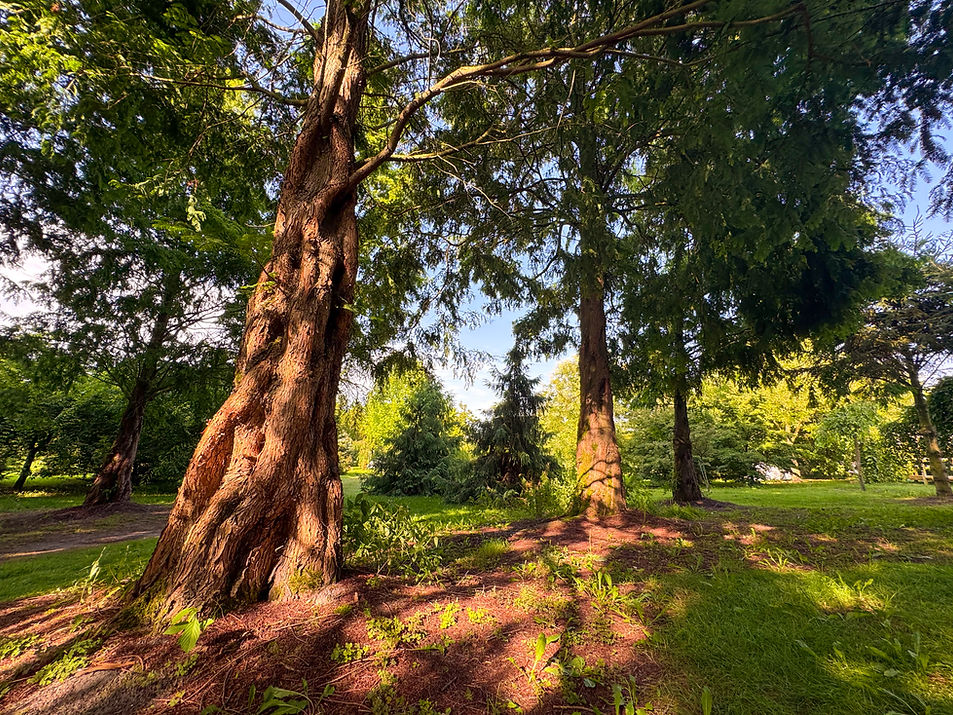
The Tenaxx Estate arboretum contains more than 1,000 tree species. They are planted by geographical origin: North America, Eurasia, China, Japan, Himalayas and Southern Hemisphere.
The collection can be roughly divided into
-
Original species
-
including a number of 'living fossils'
-
-
Weeping trees
Sammlung und Karte
Map – geographical division
In the interactive map of the arboretum on the left, you can search for species by entering the name in the Search box. You will then see where the species is located in the arboretum. For species found in a group, only a single specimen is displayed. The numbers refer to the number in the collection list and on the marker post by the tree.
The map, which you can open via the link below, shows the geographical layout of Arboretum Landgoed Tenaxx. Each colored area represents a continent or theme area. This turns a walk into a botanical world tour past native species and their corresponding weeping forms.
Legend (color boxes)
-
Eurasia – orange
-
North America – blue
-
China – red
-
Japan – yellow
-
Himalaya – purple
-
Willows – dark blue
Original species
The arboretum contains over 200 native species. Because most of them were grown from seed, natural variation within each species is visible.


Weeping trees (pendulas)


Arboretum Tenaxx, "The Hanging Gardens," specializes in weeping trees. The arboretum boasts more than 800 different weeping trees. New weeping varieties emerge annually, and the arboretum intends to expand the collection.
Where possible, the weeping varieties were planted alongside the original species. Unfortunately, this wasn't always possible.
Weeping forms occur naturally; they are natural variations. Many species have several weeping forms. In some, the weeping trait is in their genes, for example, the weeping willow and the Japanese juniper. The seeds of the tree then produce another weeping form. In most weeping trees, the weeping trait is not in their genes. The seed of a weeping form will not produce a new weeping form. These weeping forms are propagated by humans through grafting and cuttings.
Weeping trees have the most bizarre shapes. They are cherished in the "Hanging Gardens." The combination of native tree species and their associated weeping forms, with their bizarre shapes, illustrates the diversity and playfulness of nature.
Living Fossils
"Living fossils” are trees that have remained virtually unchanged in appearance for millions of years. They look just like the oldest fossils. They have hardly changed in all those millions of years. The term was first used by Charles Darwin.
Arboretum Landgoed Tenaxx has various ‘living fossils’ from the Mesozoic era, 66 to 250 million years ago, the time when the dinosaurs lived: Ginkgo biloba · Metasequoia glyptostroboides · Araucaria araucana · Sequoia sempervirens · Sequoiadendron giganteum · Taiwania cryptomeroides · Cunninghamia lanceolata · Cathaya argyrophylla · Sciadopitys verticillata · Davidia involucrata · and various Magnolia species.


Special value of the collection
The arboretum's tree collection is still young. The first trees were planted in 2005. Initially, these consisted only of native species, grown from seed, and planted in groups. The collection of sequoias and metasequoias is unique in the Netherlands for its size and beauty. The arboretum also boasts a beautiful collection of nothofagus species, native to South America, and a unique collection of abies, picea abies, and tsuga. The Tenaxx Estate arboretum likely has the largest collection of weeping forms in the world. This makes the collection unique and exceptionally valuable.